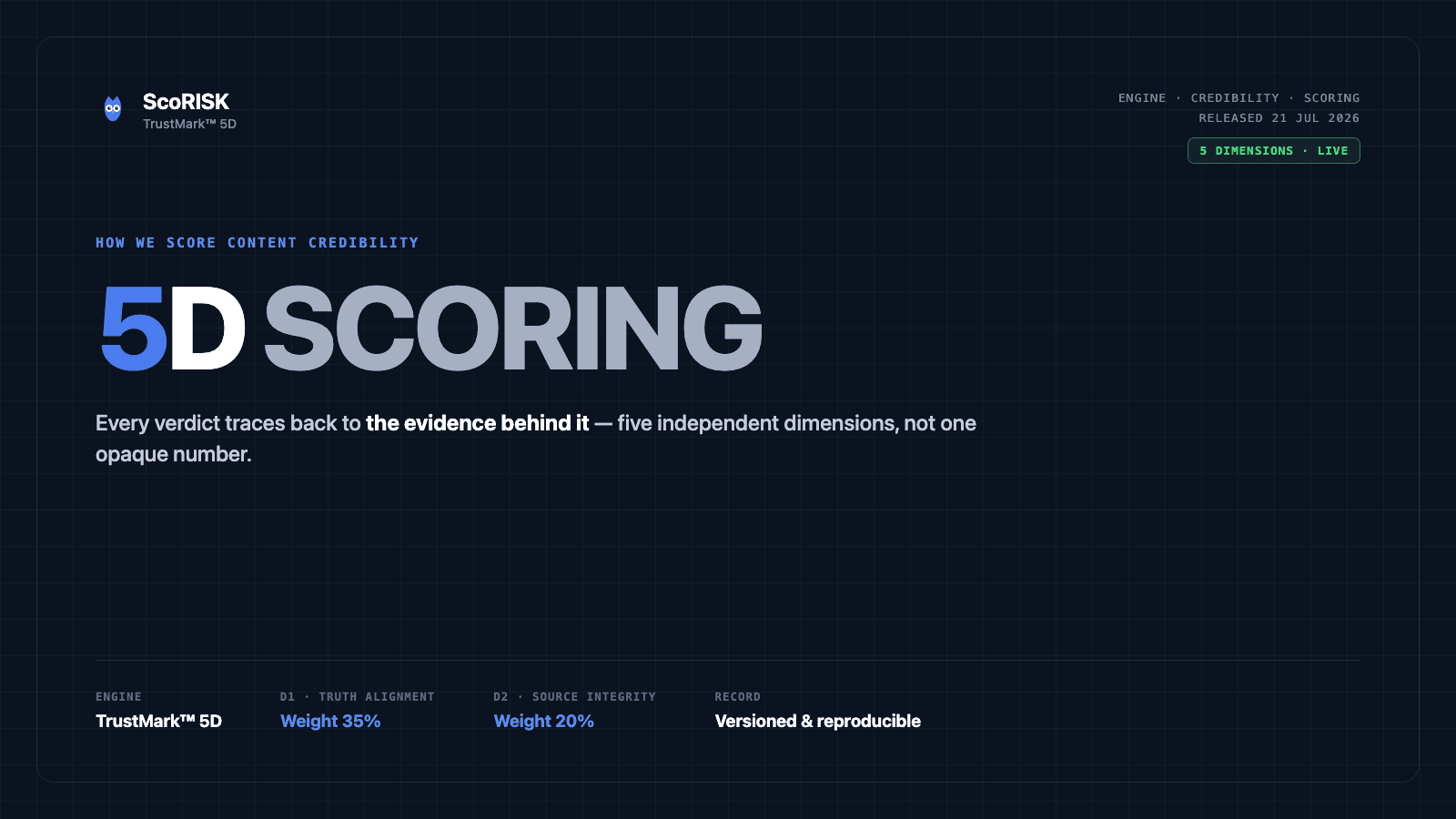
Most "fact-check" tools give you a thumbs up or down. TrustMark gives you a reason.
TrustMark™ is our credibility scoring engine. Instead of one opaque number, it breaks content down into independent dimensions, verifies claims against real evidence, and shows its work — every score traces back to the sources behind it.
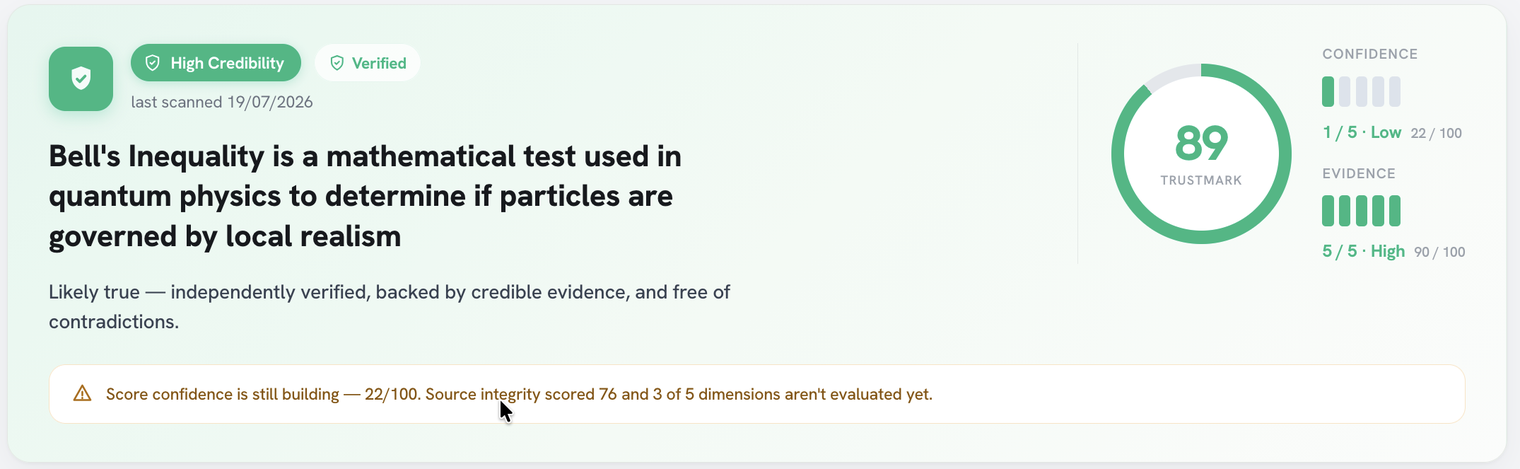
Top features today
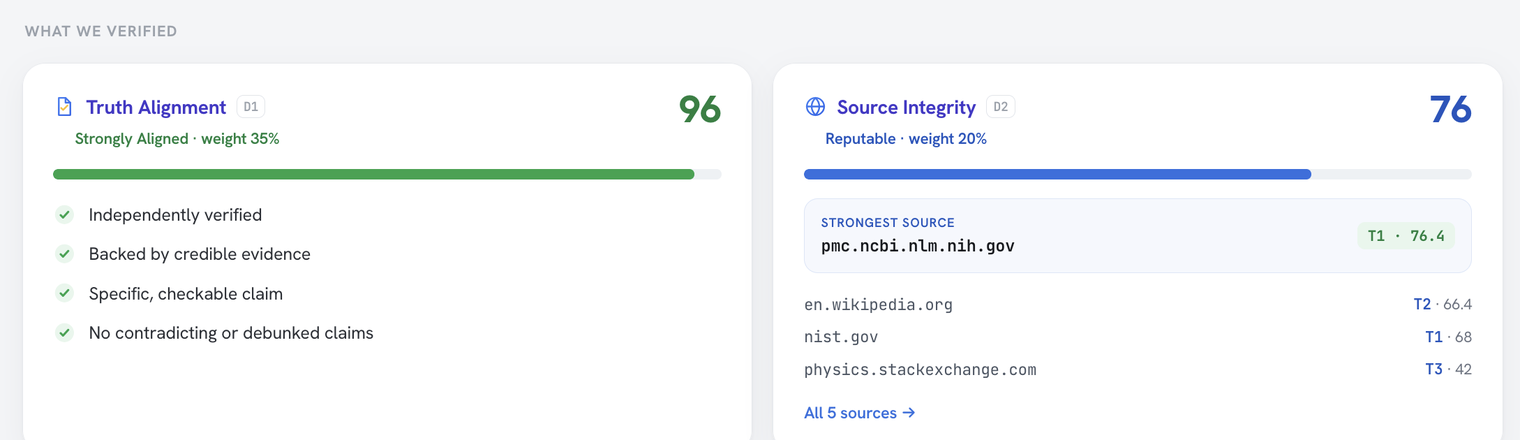
- Truth Alignment scoring — every claim is checked against independent evidence, not just the subject's own website. A claim "verified" only by its manufacturer or author doesn't count as verified here.
- Source Integrity scoring — we track the reputation of the domains behind your evidence: transparency, historical accuracy, and correction behavior, built from public reputation data (Wikipedia's reliable-sources list, academic research, and more) instead of guesswork.
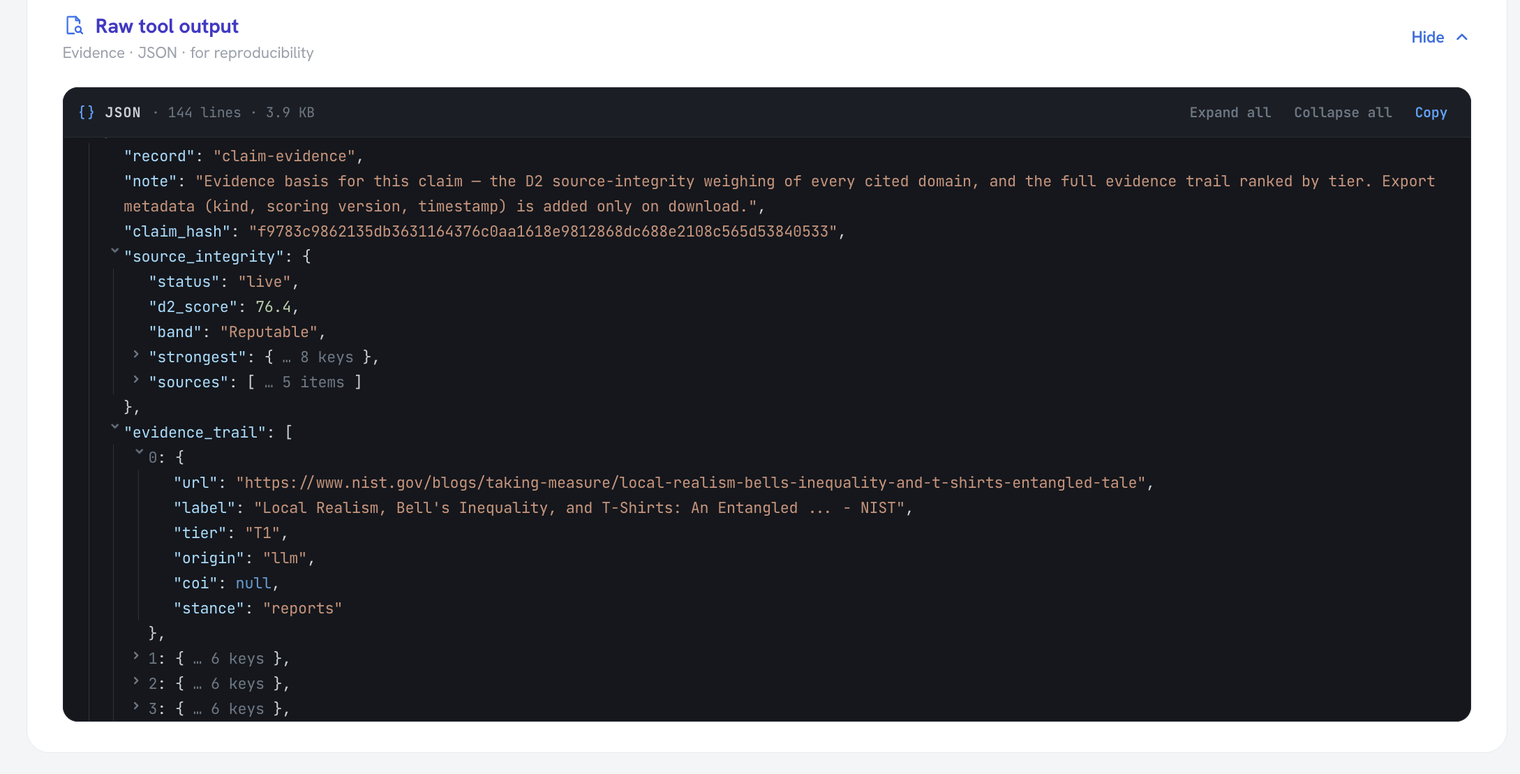
- Full explainability chain — raw signals, sub-scores, and a plain-language reasoning narrative for every result. Nothing is a black box.
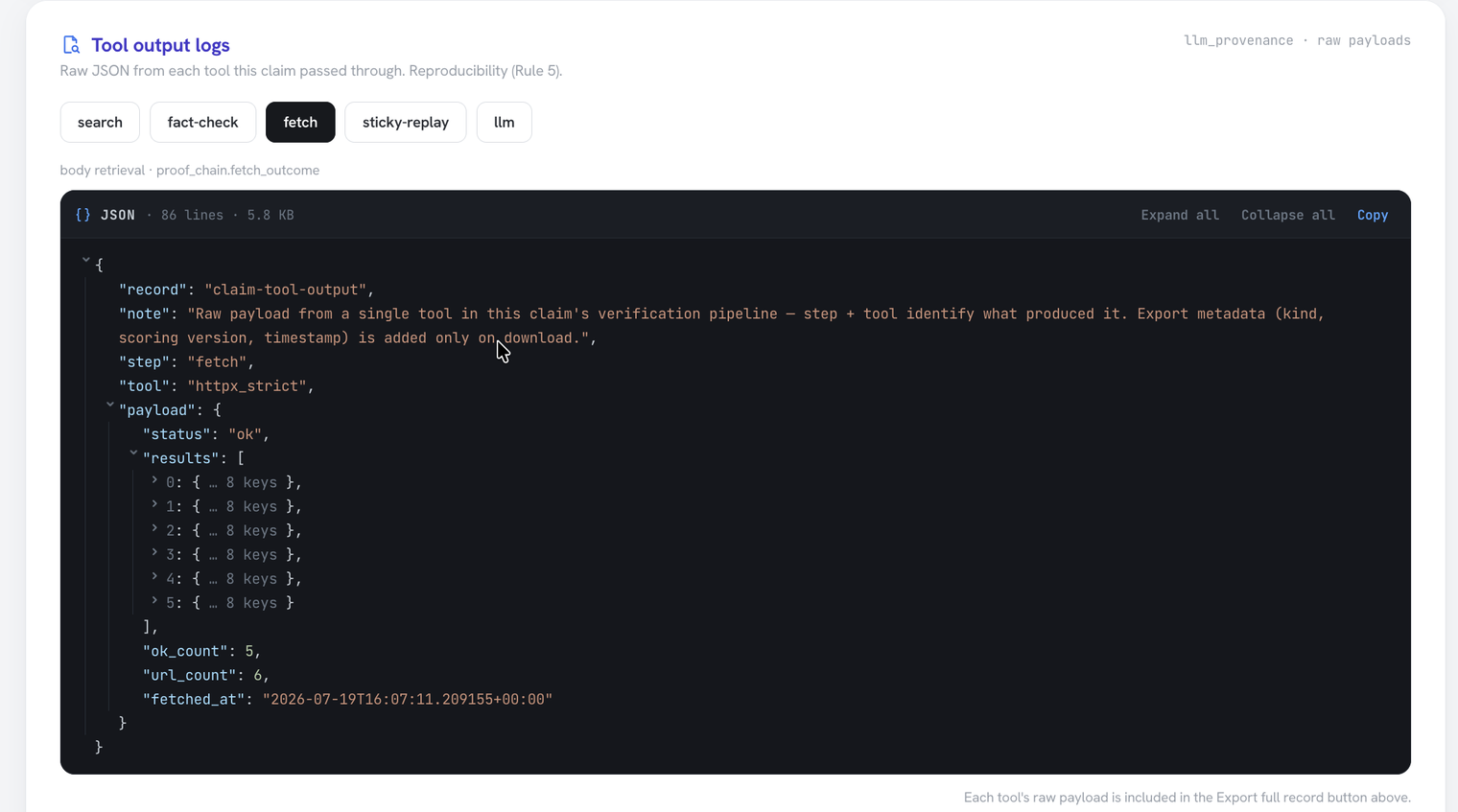
- Audit trail — every score is versioned, timestamped, and reproducible. Re-run it later, get the same number, or see exactly what changed and why.
- On-demand reverification — claims and sources can be re-checked as new evidence emerges, and the score updates accordingly.
- Built-in skepticism — a claim doesn't flip to "verified" on a single ambiguous signal; the engine requires confirming evidence before it moves the needle, avoiding false swings.
TrustMark isn't trying to tell you what to believe. It's trying to show you why — so you can check its work as easily as it checked the source's.
ProductRequest early access